Catalog
Price:

Air purifiers with UV-C, ozone and plasma technologies remove odours, microorganisms and grease from rooms and exhaust air: suitable for homes, offices, kitchens, and the food and waste-processing industries.
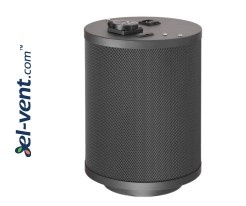
We offer the plasma air purifier Cleanair SKY, extractor hood filters Thermex Plasmex, Mini Plasmex and PWF, the duct UV-C ozone air purifier CEA mini and recirculating UV-C air purifiers UVC 30 and UVC 500/1000.
For the kitchen we also offer cooker hoods that double as air purifiers: the round Cleanair Cloud and the Green air island hoods with a built-in plasma filter.
We deliver worldwide. Continue reading at the bottom of the page.
| Product | Technology | Use |
|---|---|---|
| Cleanair SKY | plasma air purifier | room air: living rooms, offices, waiting rooms, lecture halls, food stores |
| UVC 30, UVC 500/1000 | recirculating UV air purifier (UV-C 253.7 nm) | microbe-laden air in food production, cold rooms and ripening rooms |
| CEA mini | UV-C ozone lamps in the duct | strong-smelling exhaust air: odours, H2S, ammonia – an industrial air purifier |
| Thermex Plasmex, Mini Plasmex, PWF | plasma filter | fits a cooker hood with a Ø150 mm outlet |
| Cleanair Cloud | plasma, pre-filter, activated carbon | round cooker hood and air purifier with a 36 W LED light, for continuous use |
| Green air | Thermex Plasmex filter (96.5 %) and UV lamp | island hood light that also works as an air purifier |
In rooms where people work, food is prepared or processed and waste is handled, the air is heavily polluted with organic compounds, unpleasant odours and harmful microorganisms.
We offer advanced air purification systems adapted to food, chemical, textile and waste-processing companies.
UV/ozone and NT (non-thermal) plasma purification technologies are successfully applied to ever new tasks. Purifiers and catalysts (KAT), partly combined with UV/ozone units, complement the range of exhaust air purification units of various types.
We offer various types of exhaust air purification systems that remove odours and carbon compounds, formaldehydes, H2S, volatile organic compounds and grease. We give odour removal guarantees based on official olfactometric measurements, so catering establishments and industrial sites can meet even the strictest requirements of the authorities.
The parameters of each unit are calculated on the basis of many factors (air volume, air load, microbial contamination, extraction speed, temperature, etc.) and specific requirements.
Our suppliers design and manufacture units for cleaning exhaust air containing organic components in the food industry (fryers, pans, baking and smoking installations), waste management, the textile industry, the solvent industry, metalworking and others. The most important environmental factor in industry is efficiency. Other factors are:
Our equipment is used not only in industry but also in catering and shipping (cruise liners and ferries). The result of its use is increased fire protection thanks to reduced grease in ventilation ducts, as well as the removal of:
Many expert opinions confirm that odours are neutralised and total C is reduced in line with air technical specifications and official regulations.
| Objects | Area of application |
| Kitchen exhaust air | commercial kitchens, bistros, hotels, canteens, snack bars |
| Exhaust air from rooms | liquid waste treatment plants, rubbish rooms, water tanks, grease traps |
| Supply air to rooms | hospitals, medical rooms, living rooms, food |
| Exhaust air from industrial premises | food industry, used air removal, textile industry, pharmaceutical industry |
| Supply air to industrial premises | butchers, slaughterhouses, bakeries |
| Air purification in garages, welding shops, craft studios | car workshops, garages, welding shops, craft workshops |
| Air purification in catering establishments | cruise liners, ferries, restaurants, bars, canteens, cafés, pubs, shopping centres |
All areas of building management and maintenance: decontamination, disinfection, odour removal and fire protection systems.
We offer highly efficient, economical and environmentally friendly solutions for disinfecting supply, circulating and exhaust air and neutralising odours. UV/ozone air purification systems ensure compliance with hygiene and environmental laws. All these systems use UV-C, UV/ozone or NT plasma technologies. These are, for example, disinfection of air, water and surfaces, air purifiers in the private and commercial sector, and exhaust air systems in catering. Besides microbes and odours, fire protection with UV-C, ionisation, partial ozone and ozone.
Europeans spend on average 90 % of their time indoors. According to the Federal Environment Agency, depending on age and activity, a person inhales 10 to 20 m³ of air per day, which corresponds to 12–24 kg of air. This is more than a person consumes through food and drink. Therefore indoor air quality is all the more important for people’s well-being.
Indoor air often contains harmful substances such as solvents (paints, varnishes, polymer coatings, cleaning agents), formaldehydes (carpets, disinfectants, chipboard), plasticisers (floor coverings, sealants, shower curtains), allergens (fungi, mite eggs and waste, pollen), microorganisms (bacteria, mould spores and viruses), household and fine dust. Sources of very fine dust in offices are, for example, laser printers and copiers.
Fine dust, ozone and volatile hydrocarbons (VOC) harm our health. Viruses, bacteria and allergens worsen our well-being. To obtain hygienically perfect indoor air, a ventilation unit is needed that disinfects the air and cleans it of microorganisms and pollutants, with an air exchange rate based on energy consumption. The ventilation unit must ensure a healthy and pleasant indoor climate without foreign odours, dust and draughts.
The offered units clean the air of viruses, bacteria, spores and allergens in waiting rooms and treatment rooms. They reduce air pollution and the risk of infection in staff rooms, waiting rooms, offices, classrooms or lecture halls. They neutralise unwanted odours after meals.
In food production, the processing of meat and fish is of particular concern. At all stages – from receiving and processing raw materials to producing finished products – the removal of organic pollutants, microorganisms and odours is a prerequisite for high quality and compliance with legal requirements.
In mass storage areas, where infections pose a particular danger, supply air disinfection and environmentally friendly surface decontamination are indispensable. In many cases exhaust air purification is also necessary to prevent the spread of microorganisms and unwanted odours in the neighbourhood.
For all products, not only those that reach the end consumer unprocessed, it is important to remove microorganisms on their packaging, as well as in supply and circulating air, to ensure the longest possible shelf life.
UV-C devices are used to reduce the number of microorganisms in the air in animal housing and production rooms while people and animals are present. By disinfecting air and surfaces, the risk of animal infections can be reduced and the shelf life of products extended.
UV/ozone technology can be used during cleaning stages and when there are no people or animals in the room. Air and surface disinfection is carried out, as a result of which mould and other microorganisms disappear for a long time.
UV-C devices or ultrafiltration units can be used to treat process water. Ozonation of water for washing vegetables, fruit and other fresh products gives very good results.
The effectiveness of UV/ozone devices and units is regularly monitored by studies, tests and inspections at independent institutes.
An ecological alternative to chlorine. The effectiveness of ozone as a disinfectant was investigated in various food industry companies. The results showed that ozonation is the most effective of the cleaning methods used, especially in hard-to-reach places. For example, the number of Listeria bacteria decreased by 99.9 %.
Extended shelf life. Studies showed that UV-C treatment significantly reduces mould damage to products in the food industry. For example, in a test, deep-frozen cakes remained resistant to mould for more than two weeks. Studies have clearly proven the bactericidal effect of UV-C treatment, which can also be used successfully in the meat industry.
We offer safe and economical solutions for the control of microorganisms, organic substances and odours for all areas of the food industry. Various devices designed to the requirements of a particular area are used together: UV/ozone systems for exhaust air and air purifiers, combined with each other when needed to achieve maximum efficiency in terms of purchase and production costs.
UV/ozone CFA type air purifiers can be used to clean hot air from fryers, baking lines and smoking systems with a high content of grease and persistent odours. The air is purified from organic components by photolytic oxidation. We guarantee 95 % odour neutralisation and a reduction of total C to 50 mg/m³ according to air technical specifications. CEA units are successfully used in waste management for cleaning the exhaust air of clarifiers and fermentation basins, rendering plants, biological waste disposal sites and biogas plants.
15 years ago, when UV technology for reducing grease and neutralising odours was not yet developed, fires often occurred because of grease-contaminated extractor hoods. Our suppliers succeeded in introducing UV/ozone technology that corresponds to the current state of the art. Thanks to photolytic oxidation, grease chains break down, grease does not accumulate in the hood and no microorganisms form. Odours are neutralised and fire protection requirements are reliably met.
Ozone is able to react with organic compounds (which cause odours) and oxidise them. At the same time, microorganisms, bacteria and fungal spores in the air and on surfaces are deactivated naturally, as under sunlight. The result of oxidation is clean, fresh air enriched with oxygen. Because ozone is a gas, it penetrates the hardest-to-reach places and fully disinfects the air and hard-to-reach surfaces.
Non-thermal plasma technology (NT plasma) is used for increased odour neutralisation requirements. It has a great advantage: it does not depend on the location or the ventilation system used. The compact unit can be installed in a ventilation duct or as an add-on to an extractor hood. The result is excellent air quality in pubs or restaurants with an open food preparation area. The four-stage system, based on non-thermal plasma technology and an activated carbon filter, ensures very effective exhaust air purification. The third pre-filter “Electrostat” significantly improves the quality of primary cleaning and absorbs grease. The air is cleaned of bacteria, viruses, yeasts and mould spores, and disinfected air without foreign odours and grease is returned to the atmosphere. Along with well-tested units for commercial kitchens with a capacity of 1,500 to 10,000 m³/h (CAP 1500 – 10000), we offer systems for small and mobile kitchens (CAP 600 – 1200).
Modern exhaust air purification systems combining several technologies are especially effective for catering establishments. For example, manufacturers offer automated purification units with UV/ozone technology for smoke exhaust air heavily contaminated with grease, or for charcoal grills, which remove formaldehydes and odours and reduce the overall smell of carbon products. UV-C ultraviolet purification units are also available to maintain a low number of microorganisms in supply and circulating air. Our technologies are based on scientific knowledge and are regularly assessed by specialised institutes.
When the air is cleaned with a UV-C ultraviolet device (without ozonation) while people or animals are in the room, only UV-C radiation with a wavelength of 253.7 nm destructively acts on microorganisms, including bacteria, moulds and yeasts. Benefits:
UV/ozone technology effectively fights bacteria, viruses, yeasts and mould fungi, as well as their spores, on all surfaces by ozonating the air. Benefits:
Process and washing water is disinfected with UV radiation. The units meet the requirements for drinking water treatment and are issued the appropriate certificates.
Process water is treated by ultrafiltration using a ceramic membrane filter. Particles and long-chain molecules are separated from the water. Benefits:

When exhaust air is purified with UV/ozone technology, it passes through special tubes with UV light (photozone lamps). Under their influence ordinary oxygen (O2) turns into reactive oxygen (O3), which combines with particles in the air and the exhaust air: organic and grease-containing substances are oxidised. Biodegradable residues are removed together with the exhaust air flow. Benefits:
“Cleanair Plasma” technology uses the physical principle of non-thermal plasma (NT plasma) and works without chemistry. A compact 4-stage ventilation unit with a capacity of 1,500–10,000 m³/h is used for exhaust air purification. An innovative combination of several filtration stages safely removes grease and neutralises odours. Benefits:
The offered scrubbers effectively remove water-soluble particles and odour-causing particles from exhaust air. Combinations with a scrubber are successfully used to clean the exhaust air of laboratories, booths and smokehouses. It also removes components foreign to air, such as ammonia, reduces the exhaust air temperature before photolytic oxidation and humidifies the exhaust air.
The ozone injection method is the injection of ozone into wastewater. Organic substances are thus oxidised, settle on the surface as sludge and can be removed with rakes.
In 1877 English scientists established that microorganisms cannot multiply under sunlight. Further research showed that this effect is produced by sunlight with a spectrum from 100 to 280 nm, now called ultraviolet radiation (UV-C). Based on this discovery, it became possible to clean air and surfaces of microorganisms completely without chemicals and high temperatures, including places inaccessible to disinfection by conventional methods.
| Technology | UV-C | UV-C / ozonation | Plasma | UV / ozonation | Scrubber | |
 |  |  |  | |  | |
| Air | ||||||
| Process medium | Supply / circulating air - Extractor hoods - Air conditioning systems - Packing lines | - Circulating air - Surfaces | - Circulating air - Exhaust air | - Circulating air - Surfaces | - Exhaust air | - Exhaust air |
| Process | Air and surface disinfection | Air and surface disinfection | Supply and exhaust air purification | Surface disinfection | Exhaust air purification | Particle separation and temperature reduction |
| People or animals present during the process | Yes | Yes | Yes | No | Not applicable | Not applicable |
| Areas of application Industry | - Storage and/or cold rooms - Ripening rooms - Production rooms - Packing rooms | - Air curtains - Changing rooms - Rubbish collection rooms - Treatment plant distribution rooms | - kitchens - catering rooms | - catering rooms - Storage and/or cold rooms - production rooms | - Hobs - Baking lines - fryers - Smoke-generating units - Processing units - Biogas generation | - Ammonia - Charcoal - Exhaust air from smoke-production units |
| Other areas of application | - Air conditioning systems - Hospitals - Clean rooms | - Water cabinets - rooms for allergy sufferers - Meeting rooms | - rooms for allergy sufferers | - Effects of fire and/or water - Mould treatment - Animal odours | - Kitchen exhaust air - Grease separators - Rubbish rooms | - H2S, DMS reduction - Hydrofluoric acid - Temperature reduction |
| Technology | UV | Ultrafiltration | UV / ozonation | Ozonation |
 |  |  |  | |
| Water | ||||
| Process medium | - Process water | - Process water - Wastewater | - Washing water - Surfaces | - Wastewater |
| Process | - Water sterilisation | - Water purification | - Water saturation with ozone | - Pre-treatment by ozonation |
| Areas of application Food industry | - Process water | - water in blood centres - Process water – blanching water - Wastewater | - vegetable and fruit washing | - emulsions - Meat processing |
| Other areas of application | - Drinking water | - Pharmaceutical products | - Plant breeding | - |