Catalog
Price:

Duct silencers reduce fan and airflow noise in ventilation ducts. We offer:
Installed after inline duct fans or at heat recovery units.
Choose the silencer length and insulation thickness by the fan noise level and duct diameter: a longer silencer with thicker insulation attenuates noise better. Flexible FLF-SILENCE units are handy in tight spaces and where the duct has to change direction, while TS-SILENCE suits straight main duct runs.
A ductwork silencer is chosen by duct diameter and its position in the system. A flexible silencer suits tight spaces and bends, a rigid one straight duct runs.
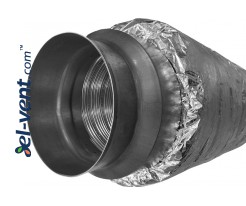
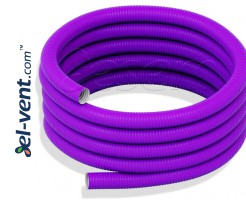
Inner part of perforated aluminium duct, outer jacket of 45-micron aluminium-polyester film. Stone wool insulation 25 or 50 mm (λ 0.034), operating range -20 to +140 °C. External sleeves slide over joints with gaskets.
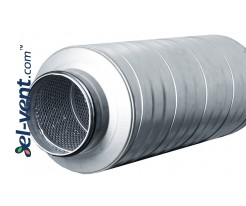
Rigid galvanised steel silencers with 5 cm insulation for straight duct sections.
Fit the silencer in the duct right after the inline fan or at the supply and extract spigots of a heat recovery unit so noise does not reach the rooms.
It reduces fan and airflow noise in the duct so it does not reach the rooms.
FLF-SILENCE is easy to connect in the duct, while TS-SILENCE suits a standard duct system.
Near the fan or heat recovery unit and anywhere noise must be reduced.
By duct diameter and position in the ventilation system.
A correctly sized silencer keeps system performance; see the product card for data.
Stone wool, 25 or 50 mm thick, thermal conductivity λ 0.034 W/mK.
FLF-SILENCE is rated for ambient and air temperatures from -20 to +140 °C.
Galvanised steel with 5 cm insulation.
FLF-SILENCE has external sleeves that slide over the joints with gaskets.
Silencers are often fitted in the supply and extract ducts of a heat recovery unit so its noise does not travel into rooms.